Dominican Republic bans Haiti from Concacaf Nations League venues
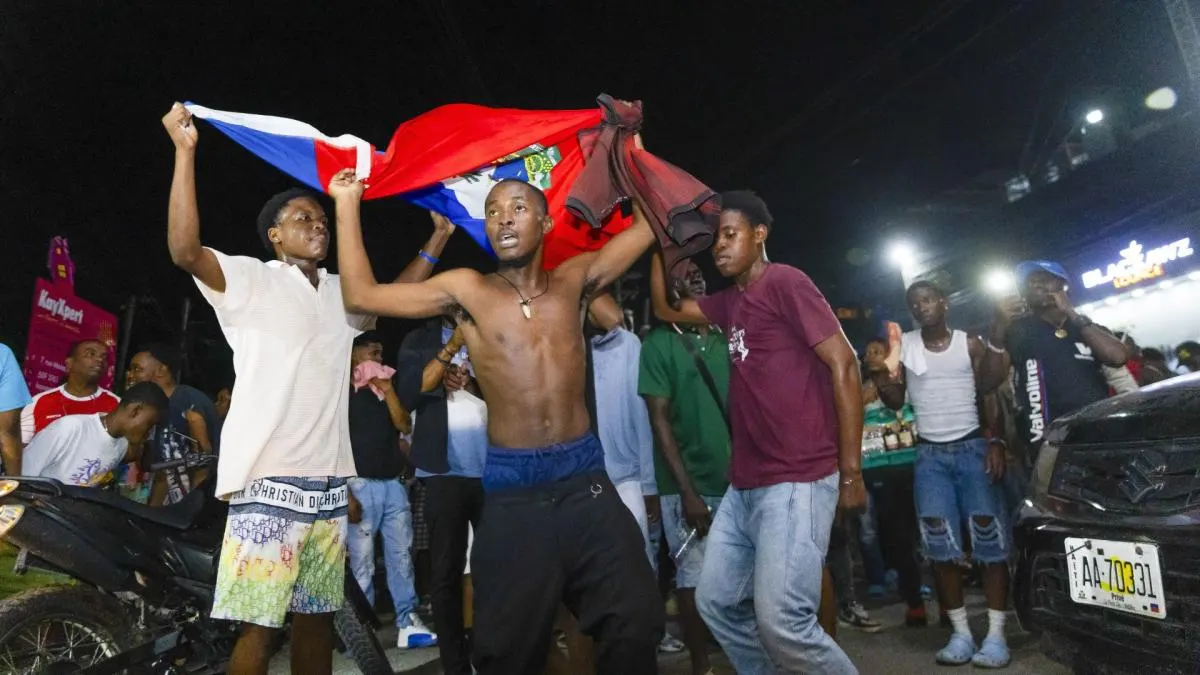
The Dominican Republic has barred Haiti’s national team from playing at its sporting facilities after a tense Concacaf Nations League derby ended 4-1.
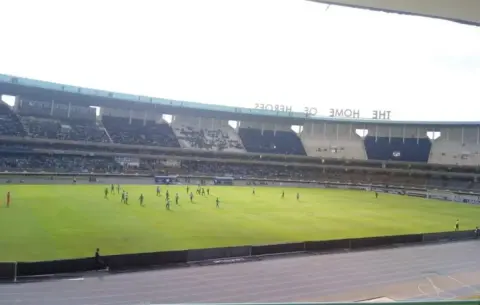
The Dominican Republic has banned Haiti’s national football team from playing at sporting facilities on its territory. The decision came one day after Haiti defeated the Dominican Republic 4-1 in a Concacaf Nations League match at the Félix Sánchez Stadium in Santo Domingo. The fixture was played under heavy security because of the strained relationship between the neighbouring countries, but the match and the departure of supporters passed without any further major incident.
The ministry’s decision followed a confrontation before kick-off. Haitian supporters tried to force their way through one of the stadium entrances after the venue had reached its capacity. The match drew around 25,000 spectators, with Haitian immigrants and fans who had crossed the border making up the largest part of the crowd. Football has a stronger following in Haiti than in the Dominican Republic, where baseball is the more popular sport.
Dominican Sports Minister Kelvin Cruz announced a “total” prohibition on Haiti’s national team using sports installations in the country. He described what happened at one of the entrances as unacceptable, particularly at a stadium that had cost the Dominican state millions of pesos. Cruz said the ministry would not tolerate indiscipline or a lack of respect, calling the measure a firm decision.
The match was the first meeting between the two national teams in the Dominican Republic since 2013. Its importance extended beyond the Concacaf Nations League because the countries share the island of Hispaniola and have a long history of political and social tension. The heavy police presence reflected the expectation that the derby could become difficult, even though no major trouble was reported once play had ended.
The result added another point of tension after Haiti’s victory. Wilson Isidor scored twice for Haiti, and his celebration also drew criticism in the Dominican Republic. After scoring, the forward was reported to have shouted, “Hispaniola, c’est Haïti ! Ici, c’est Haïti !” The words, translated as “Hispaniola is Haiti! Here, it is Haiti!”, prompted hostile reactions on social media and became part of the backlash surrounding the game.
The sporting dispute has unfolded against a particularly sensitive political backdrop. Dominican President Luis Abinader has made opposition to irregular Haitian immigration a central policy issue. His government has built a wall along the 380-kilometre border and has increased deportations, raids and immigration checks. Official figures cited in connection with the policy show that more than 265,000 Haitians were expelled between January and August 2026. Human rights organisations have criticised the approach, while it has remained popular in the Dominican Republic.
For Haiti, the ban removes the Dominican Republic as a potential venue for future national-team fixtures, at least under the current ministry decision. That matters because the countries’ shared geography had made Santo Domingo a practical location for a high-profile regional match. The 4-1 result itself will remain the central sporting fact of this meeting, but the dispute over the entrance, the crowd and Isidor’s celebration has now shaped the fixture’s wider consequences.
The next stage will depend on how the ban is applied and on the arrangements made for any future Haiti matches that would otherwise have been played in the Dominican Republic. No further incidents were recorded during the match or as supporters dispersed, but the ministry’s announcement shows that the pre-match confrontation was considered serious enough to affect football policy. The derby has therefore ended with consequences beyond the Nations League scoreline, placing future cross-border fixtures under increased scrutiny.
Source: Foot Mercato
 Ittihad Tanger
 Moghreb Tétouan
 Edinburgh
 Stormers
 Asante Kotoko
 Karela
 Mombasa Elite
 Kariobangi Sharks