
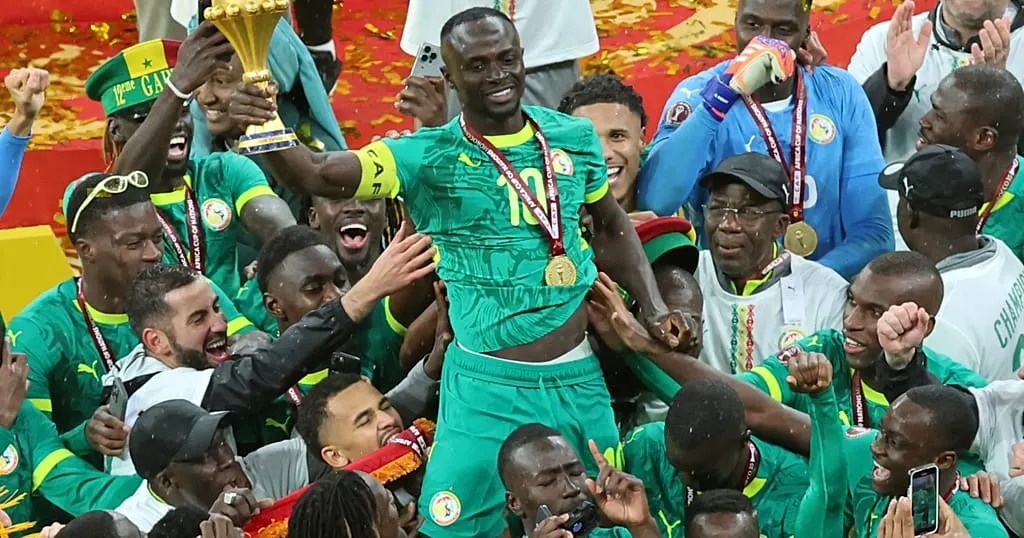
Ethiopia Officially Bids to Host the 2028 Africa Cup of Nations
Ethiopia has submitted its bid to host the 2028 Africa Cup of Nations, seeking a return to the tournament 52 years after its last home edition.
Ethiopia has officially entered the race to host the 2028 Africa Cup of Nations. The Ethiopian Football Federation confirmed on Monday evening that it had submitted its bid to the Confederation of African Football, with the backing of the federal government. The application gives Ethiopia a formal place in the process for the first Africa Cup edition under the competition’s new four-year cycle.
The federation had initially been considering a bid for the 2029 tournament. CAF’s decision to move the Africa Cup from a two-year schedule to a four-year schedule from 2028 changed that plan. Ethiopia revised its timetable and submitted a proposal for 2028 instead. The shift also means that the bid is aimed at the first edition of the competition under the new calendar, rather than a later tournament in the previous cycle.
A successful bid would bring the Africa Cup back to Ethiopia 52 years after the country last hosted it. Ethiopia staged the tournament in 1962, 1968 and 1976. Its first hosting experience remains the most significant in the country’s football history. In 1962, Ethiopia won its only continental title in front of its home supporters. The 1976 edition was the last time the finals were played in the country.
The timing of the application is connected to a wider change in the hosting calendar. Kenya, Uganda and Tanzania will jointly stage the 2027 Africa Cup from 19 June to 17 July. The 2028 tournament will then begin the new four-year rhythm, designed to bring the Africa Cup into line with other major FIFA competitions. Morocco hosted the most recent edition, while the East African partnership has already been assigned the next tournament before the 2028 host is selected.
CAF opened the bidding procedure in July for the 2028, 2032 and 2036 editions. The candidates are to be assessed through technical, financial and organisational criteria. Ethiopia’s submission is therefore only the opening stage of the process. The federation and the government will need to present a project that addresses the requirements for venues, transport, accommodation, security, financing and tournament operations. The available material does not identify Ethiopia’s proposed host cities, stadiums or budget.
Security is one of the most serious issues surrounding the Ethiopian application. Insurrections are continuing in Amhara and Oromia, the country’s two most populous regional states. There are also concerns about a possible return to civil war between the federal government and the Tigray region in the north. Those conditions create a significant challenge for any bid built around international travel, the movement of teams and supporters, and the need to guarantee secure match operations across a major tournament.
Ethiopia’s sporting profile also forms part of the context. The national team is ranked 143rd among 211 countries by FIFA. Its most recent Africa Cup appearance came in 2022, when it was eliminated in the group stage. Hosting would give the country a route back to the centre of the continental game despite that recent record, while also reconnecting the tournament with the nation that produced the 1962 champion team.
The available competition database does not record the Ethiopian national team’s recent results. It lists a side named Nations in club competition, with a draw against Dreams, wins over Karela and Hearts U21, and defeats by Vision and Young Apostles in its last five matches. Nations’ next listed fixture is away to Diarra in the CAF Confederation Cup on 5 September 2026. Those figures describe a separate club-team record and do not provide a sporting assessment of Ethiopia’s national side or its hosting proposal.
The next stage is for CAF to examine Ethiopia’s dossier alongside the other applications submitted for the three available editions. The bid’s historic appeal is clear: it would return the Africa Cup to a three-time host and the site of the competition’s first Ethiopian title, while extending the tournament’s reach in the Horn of Africa. Its prospects will depend on whether the country can meet CAF’s technical and organisational standards and address the security concerns affecting several regions. Ethiopia has made its intention official; the evaluation process will determine whether that ambition becomes the 2028 tournament.
Source: Africanews (FR)
 Wydad AC
 Mike Malott
 Joaquin Buckley
 Cristian Pérez