Lionel Messi Retires from Argentina After 2026 FIFA World Cup
Lionel Messi has ended his Argentina career at 39 after the 2026 World Cup final, leaving as the nation’s record appearance holder and leading scorer.
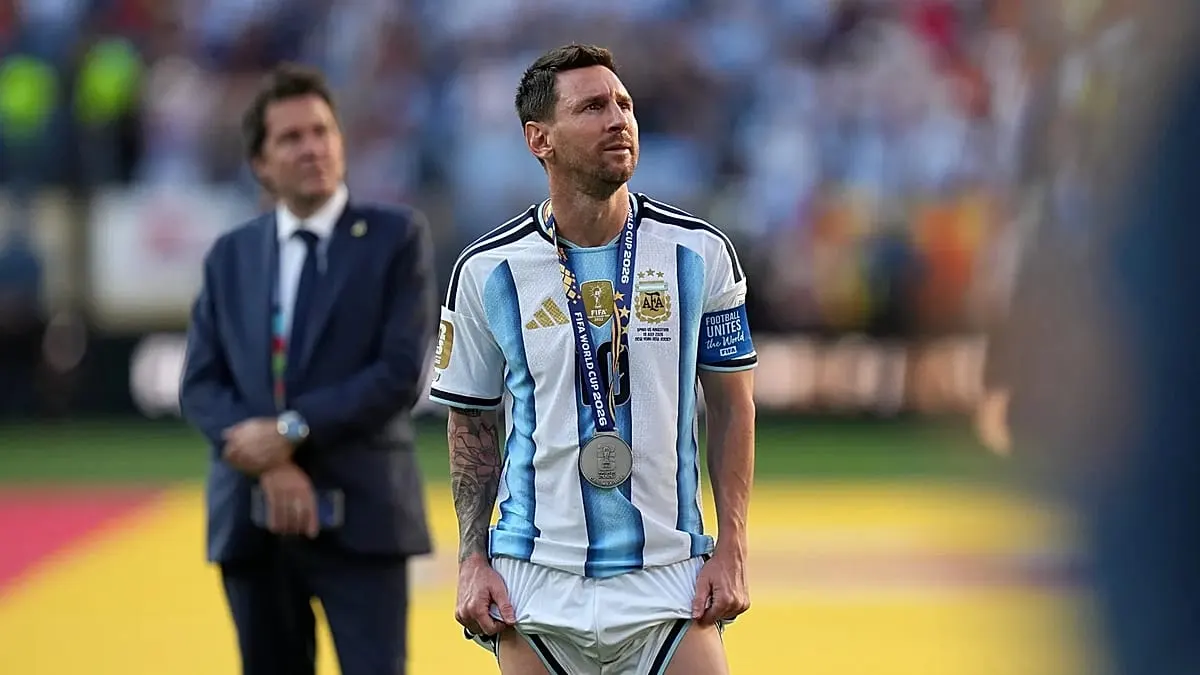
Lionel Messi has announced his retirement from international football with Argentina, ending a 20-year association with the Albiceleste. The 39-year-old confirmed the decision in a message published on Instagram after Argentina’s 1-0 extra-time defeat by Spain in the 2026 FIFA World Cup final on 19 July. The announcement closes the international career of a player who became Argentina’s most capped footballer, leading scorer and central figure in its most successful modern period.
Messi said the decision was painful but that he understood the time had come. He wrote that he had always given everything to the national team, not only during the years when Argentina won major trophies but also earlier in his career. He said he had nothing more to offer and pointed to the young talent emerging behind him as another reason to leave space for the next generation.
The forward revealed that he had written the farewell message on 21 July, two days after the World Cup final. He did not publish it immediately. The death of his father, Jorge Messi, from a long illness on 8 August at the age of 68 reinforced his decision. Messi said that, after what happened to his father, he was even more convinced that retiring from the national team was the right choice.
Messi leaves Argentina with 207 appearances and 125 goals, both national records. His first Argentina goal came against Croatia in 2006, while his final goal was scored against Egypt during the 2026 World Cup. Across his international career, he also became the player most closely associated with Argentina’s recovery from several major final defeats to a period of sustained success.
That transformation began with the 2021 Copa América final against Brazil at the Maracanã. It was Messi’s first senior major international title with Argentina after losses in the 2014 World Cup final against Germany and the 2015 and 2016 Copa América finals. Argentina then beat Italy in the 2022 Finalissima before Messi captained the team to the 2022 World Cup title in Qatar, where it defeated France in a final that ended in a penalty shootout.
Argentina added another Copa América title in 2024, giving Messi a sequence of four senior international trophies in three years when the Finalissima is included. He had previously won Olympic gold with Argentina in 2008. The 2026 World Cup final offered a final opportunity to add to that record, but Spain won 1-0 after extra time. Messi’s final tournament therefore ended with a runners-up medal, although his wider international record includes the World Cup and two Copa América triumphs.
His first attempt to leave the national team came after Argentina’s defeat by Chile in the 2016 Copa América final. Messi announced his retirement at that time but later returned to international football. That reversal led to the most decorated phase of his Argentina career. This time, his message presents the decision as definitive, with Messi describing himself as moving from the pitch to the stands as a supporter of the team.
In his farewell, Messi thanked Argentina’s supporters, his family, coaches, teammates and officials. He said the encouragement from the stands would be what he missed most and that he would now support the national team from outside the field, in good moments and especially difficult ones. He also described the memories shared with his teammates and the public as experiences he would never forget, ending with a declaration of love for Argentina and thanks for having been born Argentinian.
The international retirement leaves Messi’s remaining competitive appearances tied to Inter Miami and Major League Soccer. Argentina must now move forward without the player who holds its records for caps and goals and who led the team through its return to the top of world football. The next generation he mentioned will inherit a national side shaped by his two decades in the shirt, but without its record-breaking number 10 on the pitch.
Source: Euronews · Sport (français)
 AFAD
AFAD SOA
SOA San-Pédro
 ASEC Mimosas
 Kwara United
 Berekum Chelsea
 Medeama