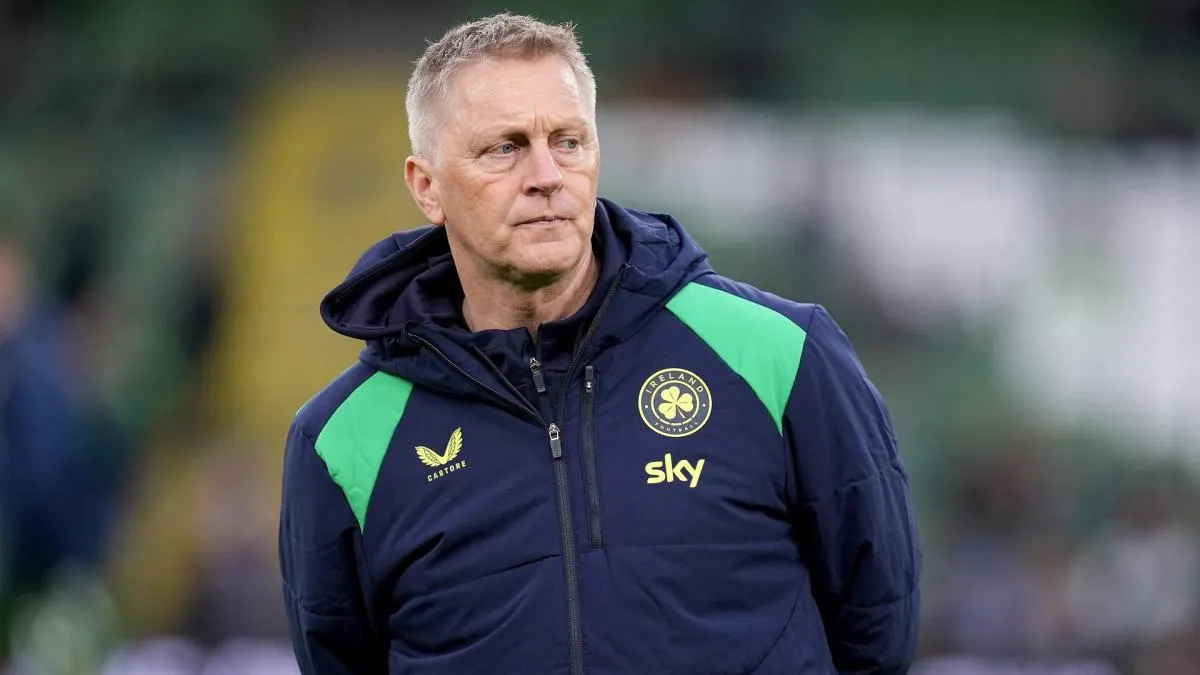
Ireland's 3-0 Nations League win over Israel carries a message
Ireland beat Israel 3-0 in Debrecen after a players’ protest over Gaza, with lowered heads, black armbands and a refusal to exchange handshakes.
Ireland defeated Israel 3-0 in Debrecen on Sunday, but the Nations League match was defined as much by the players’ actions before and during the game as by the result. Played at the Nagyerdei Stadion in Hungary on neutral ground, the fixture took place after days of debate inside Irish football over whether the team should participate while the war in Gaza continues.
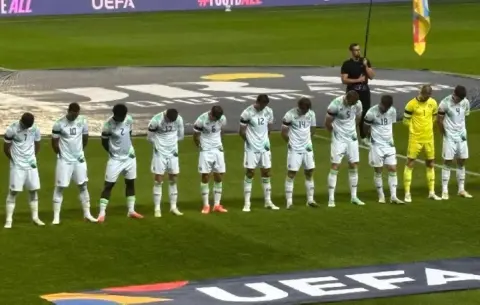
The Irish players kept their heads lowered during Israel’s national anthem and did not take part in the customary handshake before kick-off. They also wore black armbands in memory of victims of the conflict. The gestures turned an already politically charged fixture into a visible protest, while Ireland produced a controlled performance to secure a clear victory on the field.
The decision to play followed a two-hour meeting on Friday and a delayed training session on Saturday morning. Ireland’s scheduled press conference was cancelled as the squad considered its position. David Courell, the Football Association of Ireland’s director general, said one player had told manager Heimir Hallgrimsson that he felt uncomfortable taking part and intended to withdraw from the squad.
The issue was then put to a vote among the players. “We proceeded to a vote to find out the players’ opinion on maintaining the matches, and a large majority were in favour of continuing the competition,” Courell said. He added that the decision to travel to Hungary reflected the group’s original intention at the start of the international window and the consensus reached after the discussion.
Goalkeeper Gavin Bazunu ultimately chose a different path. He left the Ireland camp, saying he considered it inappropriate to participate in the match. The decision was reportedly supported by several members of the squad. Hallgrimsson respected the goalkeeper’s choice, while backing the players who remained and expressed support for their decision to make their position visible.
“They have supported the protest, they have raised awareness throughout the world, and not only in Ireland, about this issue,” Hallgrimsson said after the match. The symbolism continued when Jack Moylan scored Ireland’s third goal. The forward kissed his black armband and then the Ireland crest, linking the match’s sporting outcome with the message the team had chosen to carry.
Ireland’s stance has roots beyond this fixture. Calls for a boycott had gathered momentum in the days before the match, led by the Irish Sport for Palestine group and supported by more than 160 athletes. The FAI faced the possibility of UEFA sanctions if Ireland refused to fulfil the fixture, making the decision to play on neutral ground a compromise between taking part in the competition and acknowledging the strong domestic opposition to the match.
The protest drew an angry response from Israel’s foreign minister, Gideon Saar. On X, Saar accused Dublin of being “on the wrong side of history” and referred to a 1939 photograph in which an Irish team appeared to perform a Nazi salute before Germany. He wrote that Ireland had once made that gesture and was now standing “on the side of Palestinian terrorism”, adding that above the black armbands would fly “the black flag of jihadism”. The remarks prompted strong criticism in the United Kingdom.
For Ireland, the 3-0 result gave the debate a further sporting dimension. The team avoided the sanctions and disruption that could have followed a withdrawal, while its players still delivered a collective protest in front of an international audience. FAI president Paul Cooke praised the handling of the crisis, although he criticised the media coverage surrounding it. The result also gave Ireland momentum before the next meeting with Israel, scheduled for 4 October at Backa Topola in Serbia. That match will again be played on neutral ground, with the political dispute and the players’ decision to express their views likely to remain part of the fixture’s significance.
Source: Foot Mercato
 Kawkab Marrakech
 Hassania Agadir
 Maghreb de Fès
 CR Khemis Zemamra
 Moghreb Tétouan
 Renaissance Berkane
 SOA
SOA AFAD
AFAD